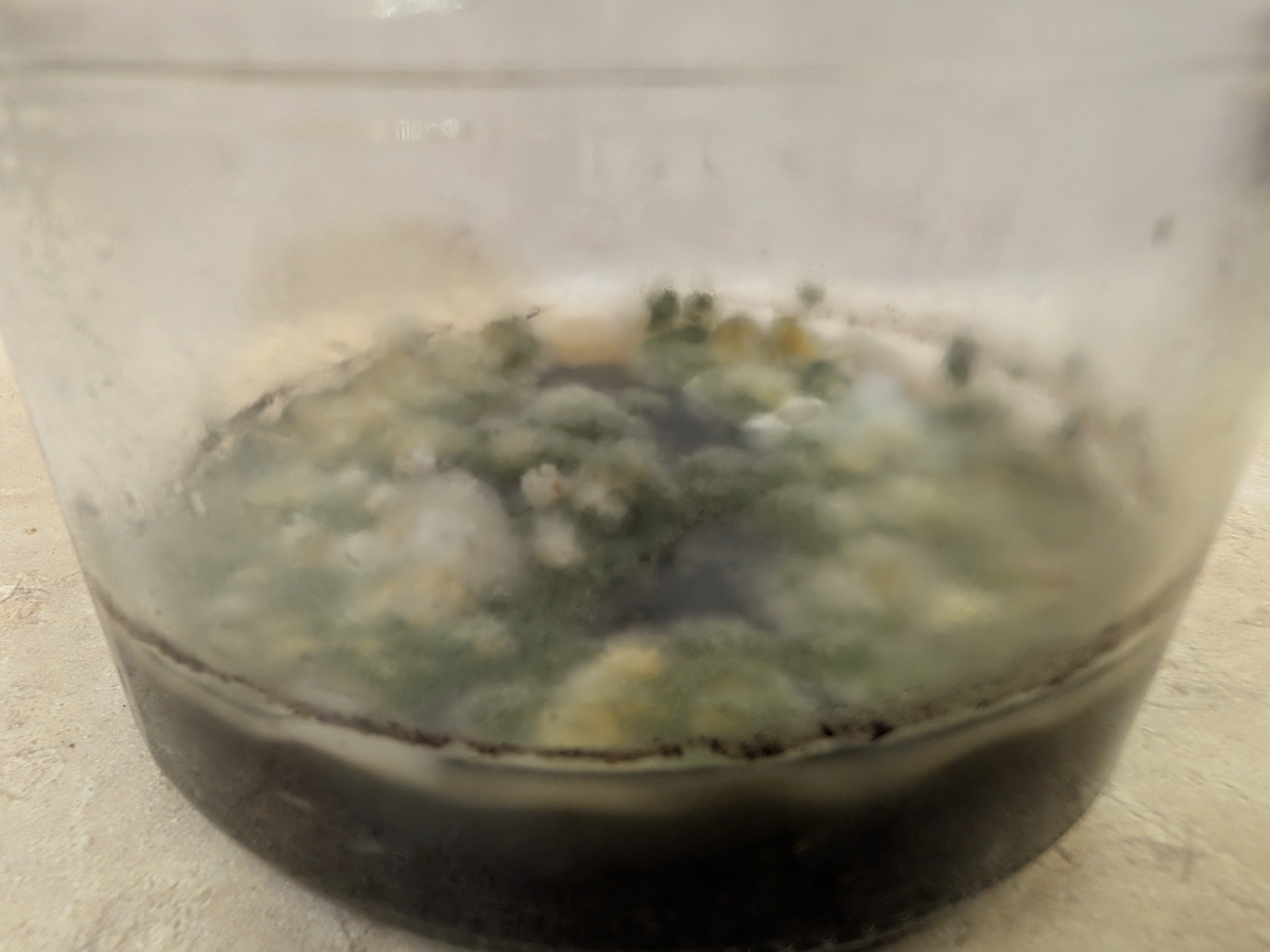
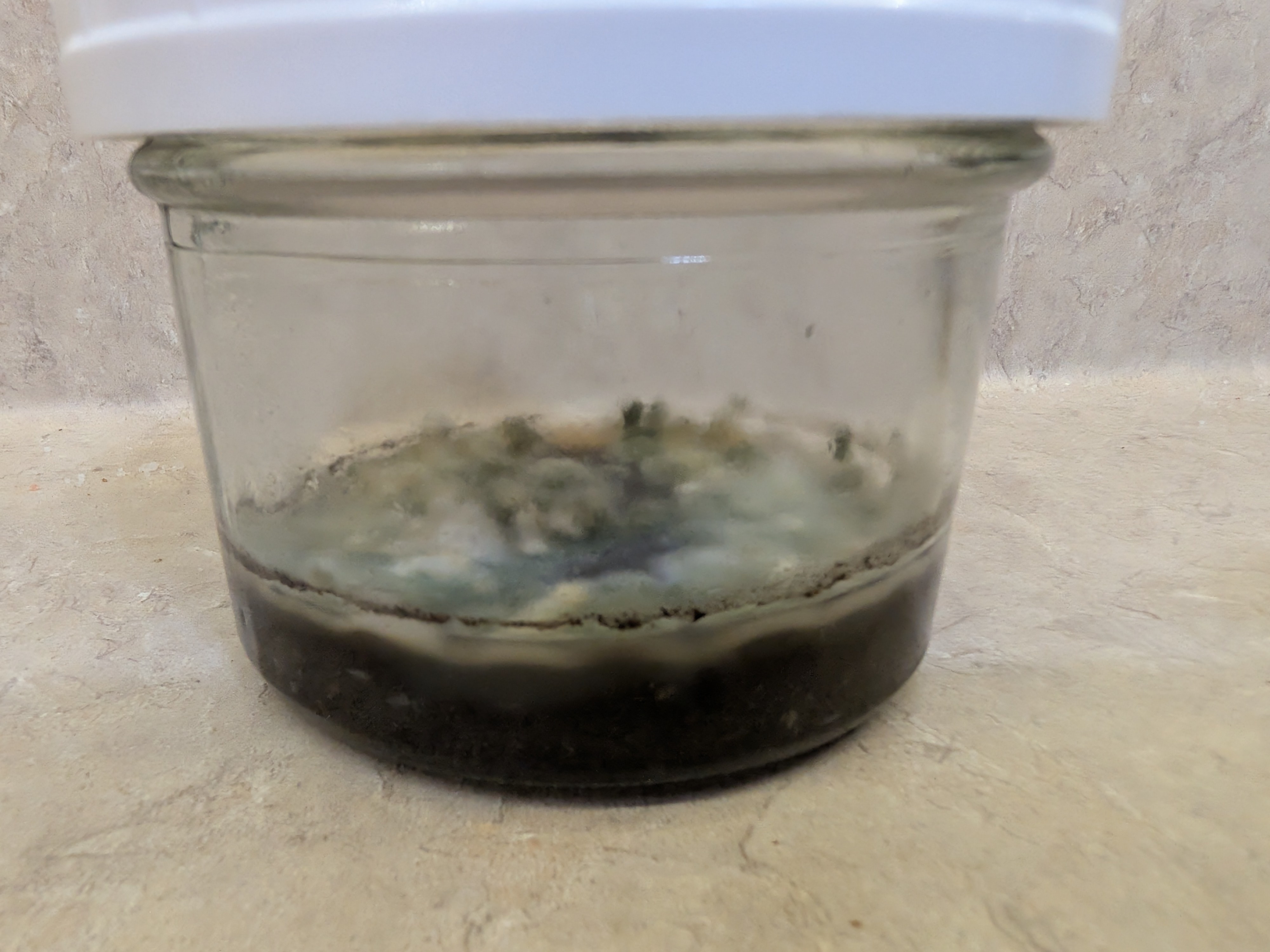
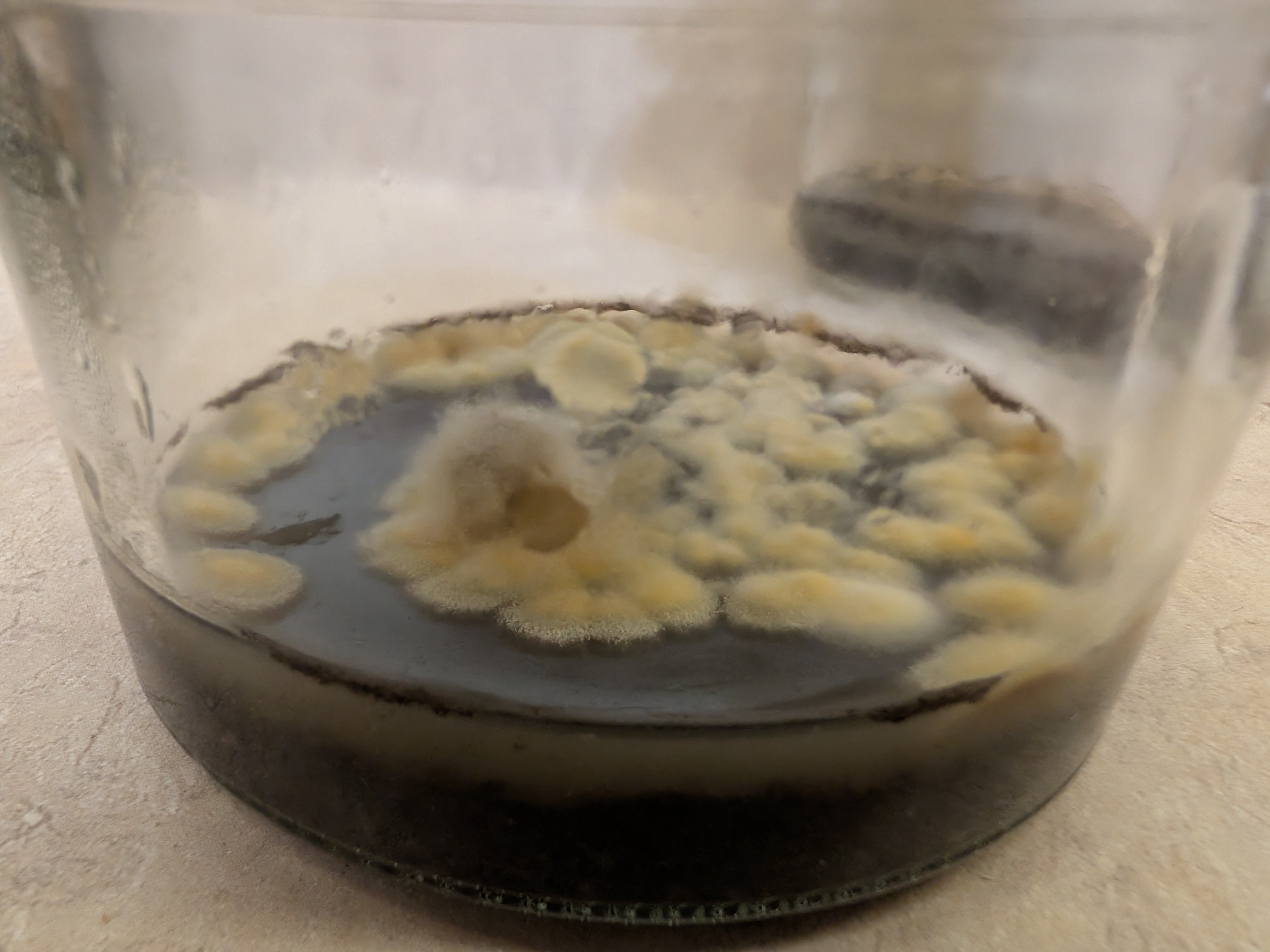
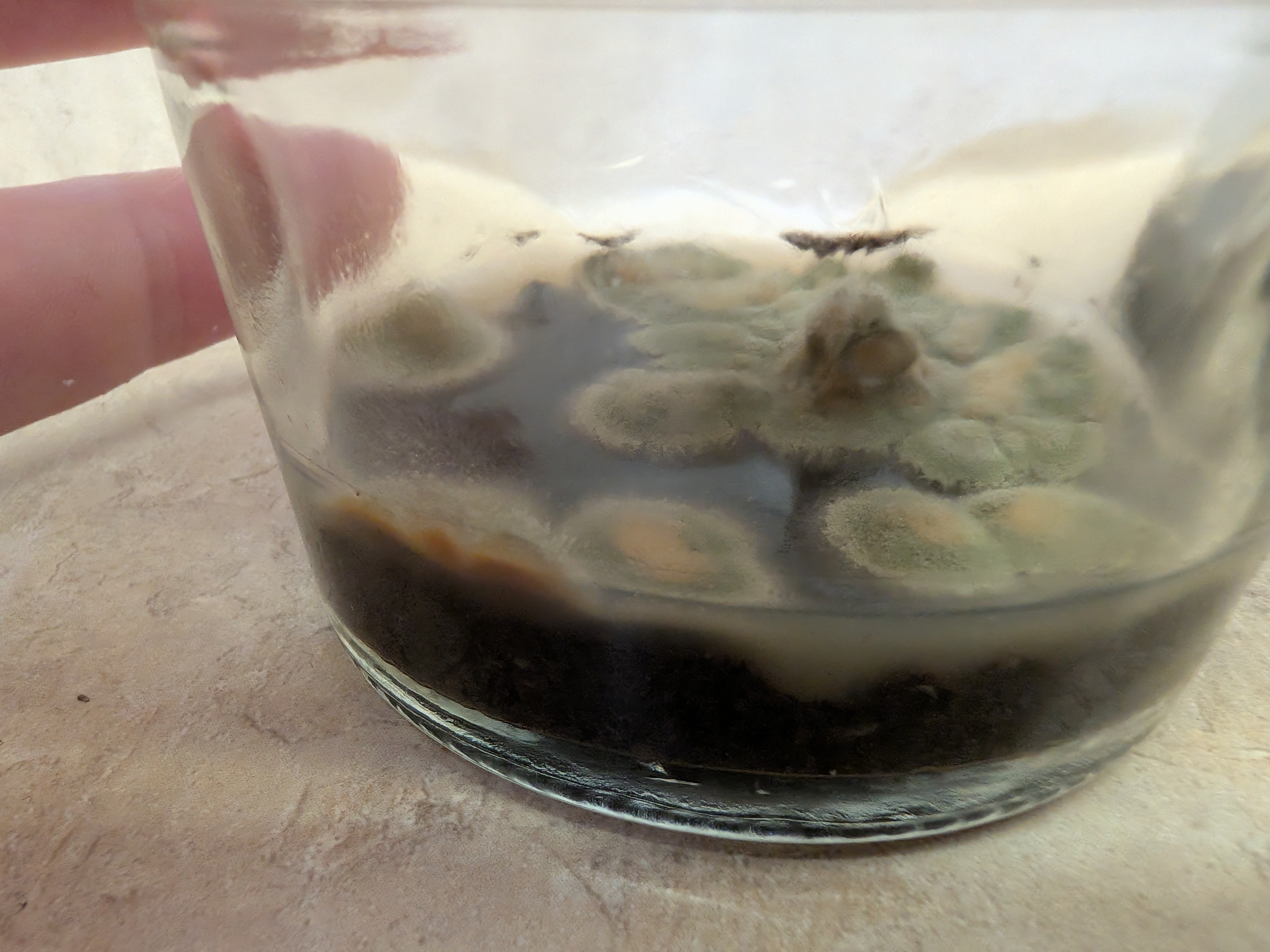
Contamination / The Competition
Contamination is just part of the game. It's helpful to know who your competition is, and learning to identify and manage them safely is too. I just try to get better every time and try my best. Contamination can be disappointing, especially when you are just starting out, so don't let it get you down—no one is perfect, and we're all just learning as we go. The key to being successful is learning which part of the process went awry.
Safe Contamination Cleanup
Cleaning contaminated jars is just a normal part of the process. While you don't want to release unnecessary spores into your kitchen, it's easily managed. I use the Soapy Water Spore Suppression technique to safely handle and wash them:
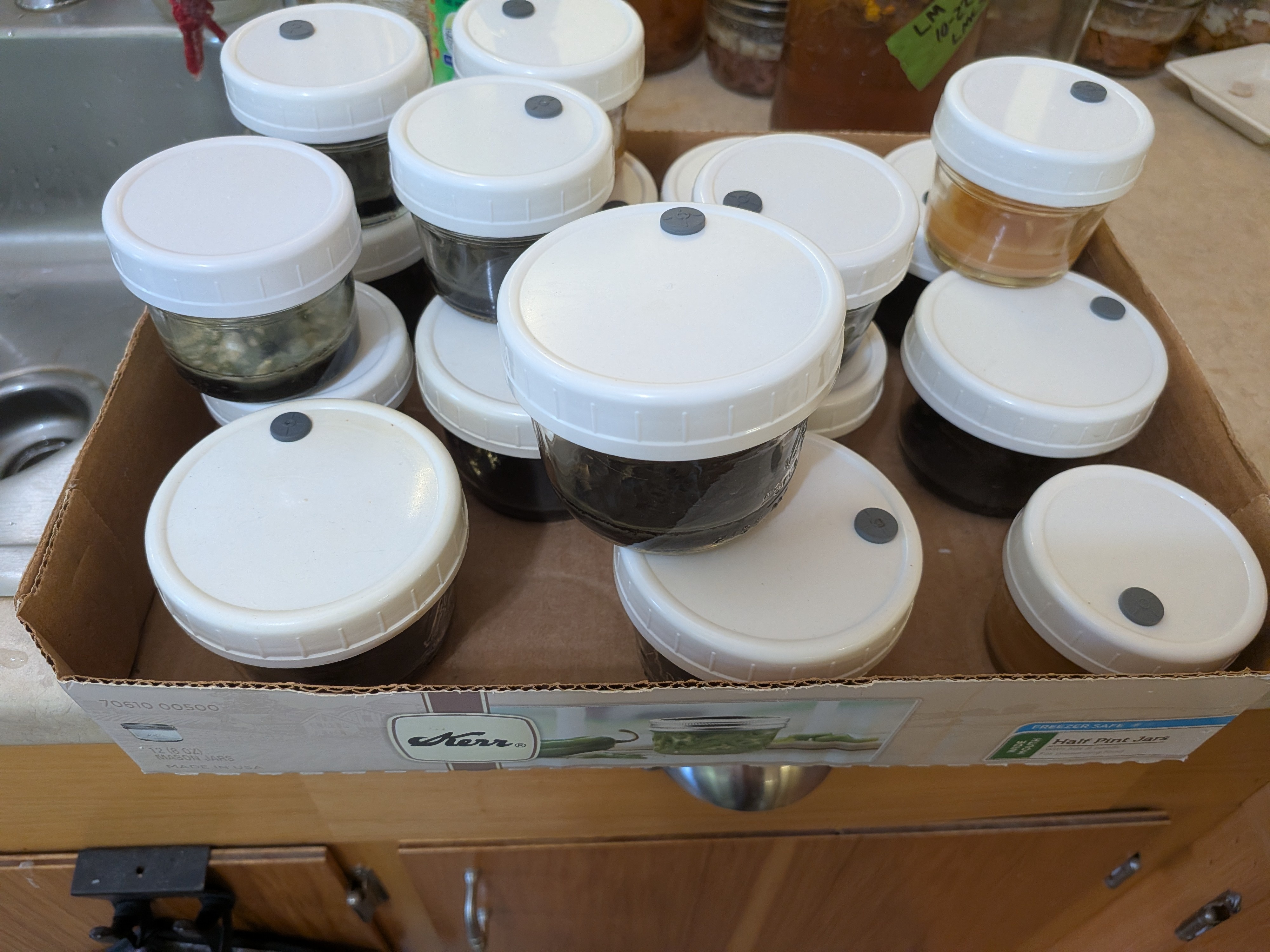
Old or failed experiments ready to be washed
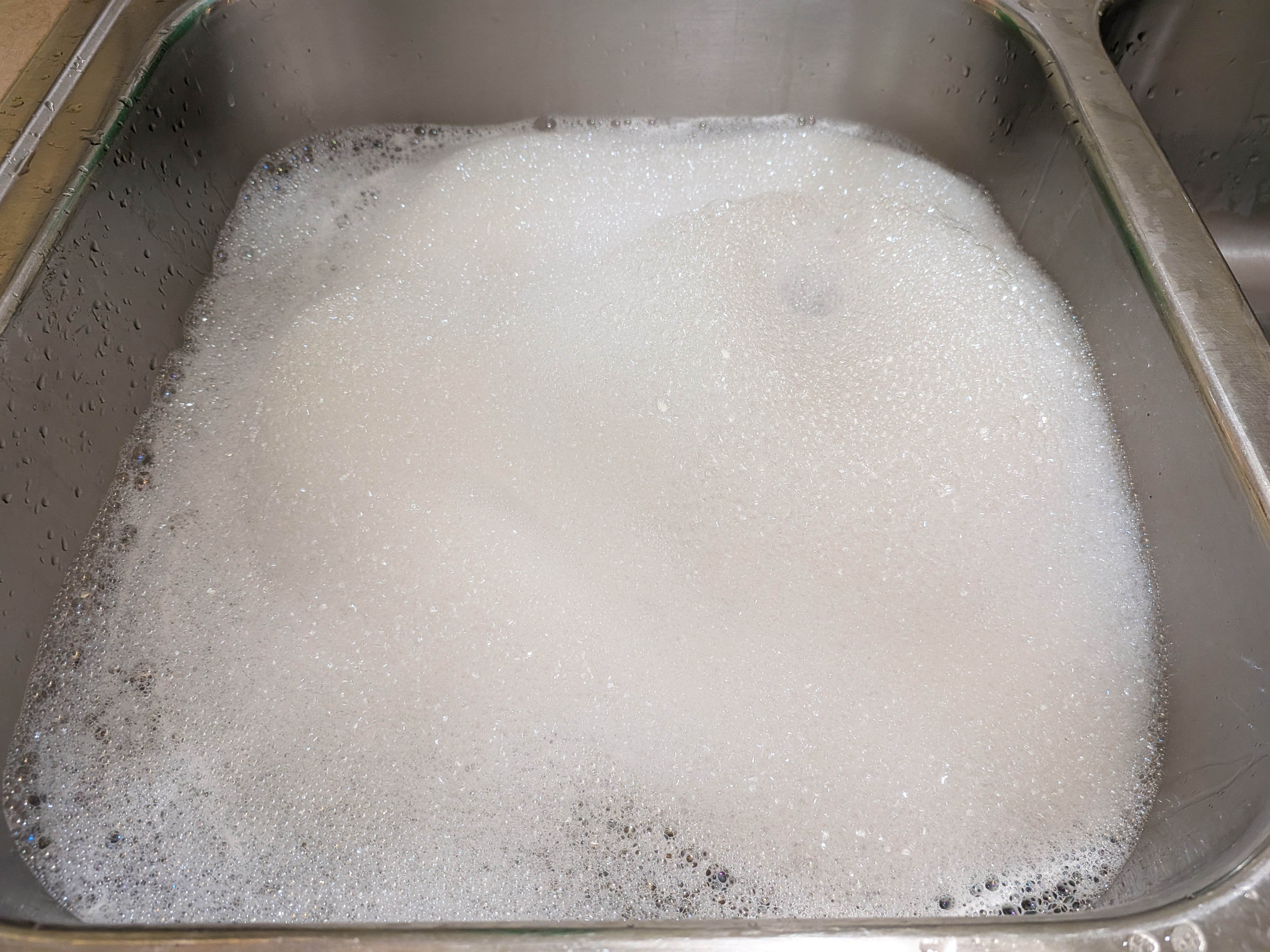
Slowly opening jars under a thick layer of foam
- Keep it Closed: If you spot contamination in a jar, keep the lid sealed until you are ready to clean it.
- The Foam Trap: Fill your sink with warm, soapy water and create a thick layer of foam (suds).
- Underwater Opening: Submerge the contaminated jar completely. Slowly open the jar underwater. The foam and water will trap and suppress the spores, preventing them from flying into the air.
- Deep Clean: Once emptied, wash the jar thoroughly (or run through the dishwasher) before reusing.
The Identification Gallery
Early identification allows you to mark a jar as contaminated and ensure it remains sealed until it's time for safe cleanup. Recognizing these competitors early prevents you from accidentally using a bad culture for expansion or opening an infected jar in your workspace.
While this isn't a complete list, here are some of the most common contams you'll face. Contamination is inevitable at first, but it becomes much less common as you master your sterile work. Remember: success in this hobby is built on practice and redundancy. If you take enough samples, you will always have a winner.
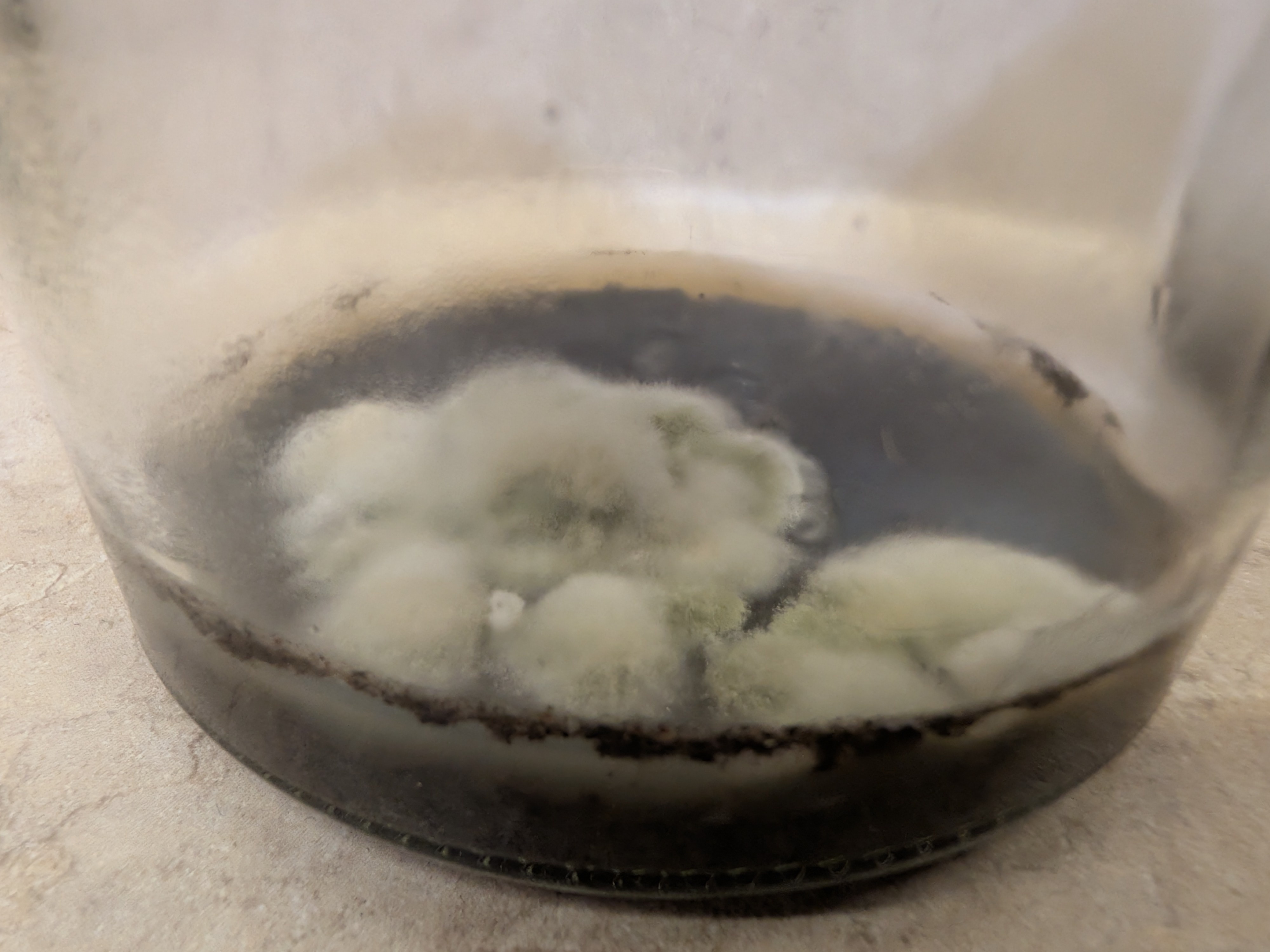
Trichoderma (Green Mold)
The "Green Monster." It starts bright white (often mistaken for mycelium) but quickly turns dark green as it produces spores. Extremely aggressive.
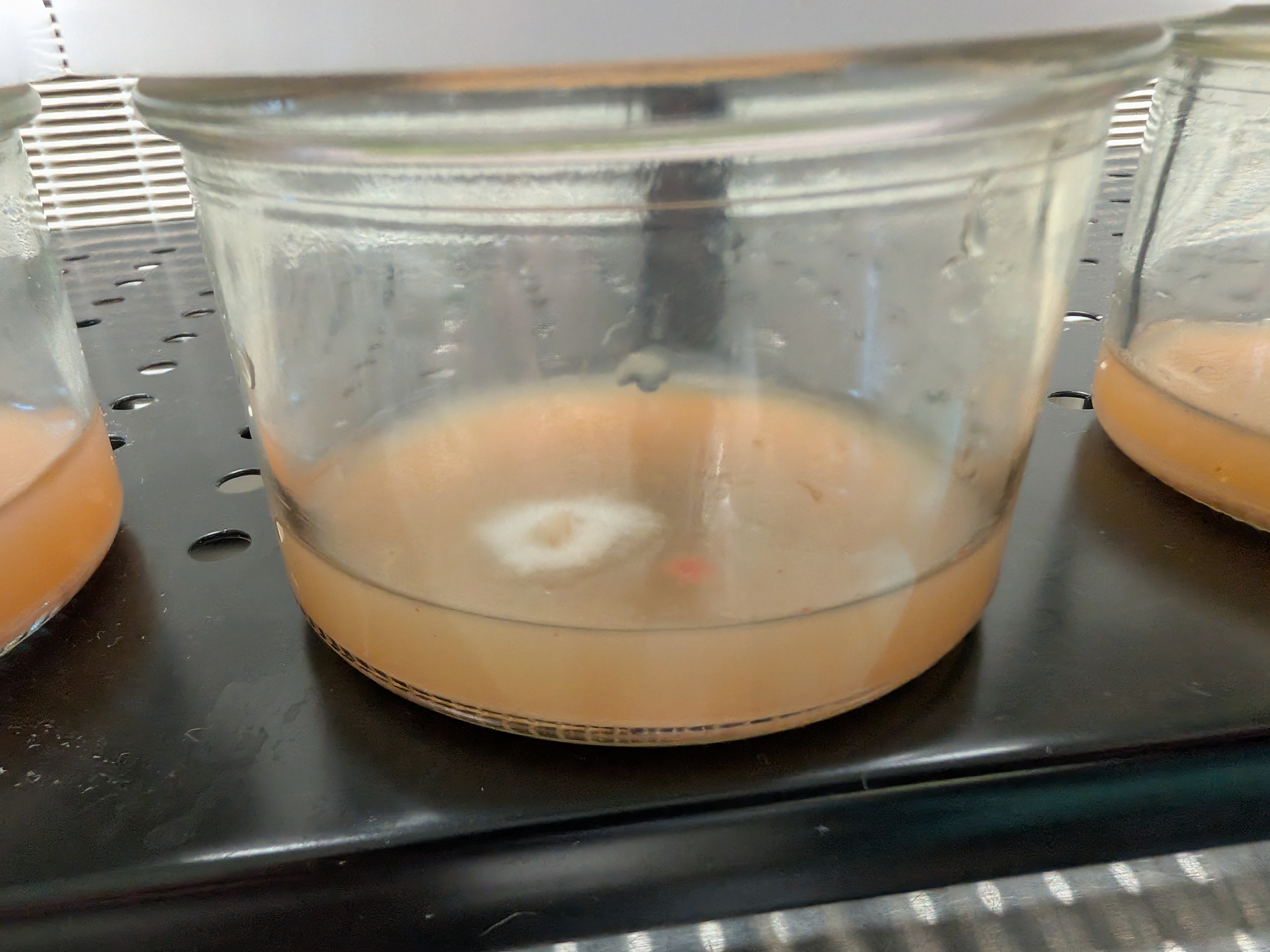
Orange Bread Mold (Neurospora)
Bright orange or salmon-colored. It grows incredibly fast and produces massive amounts of airborne spores. If you see this, keep the jar sealed!
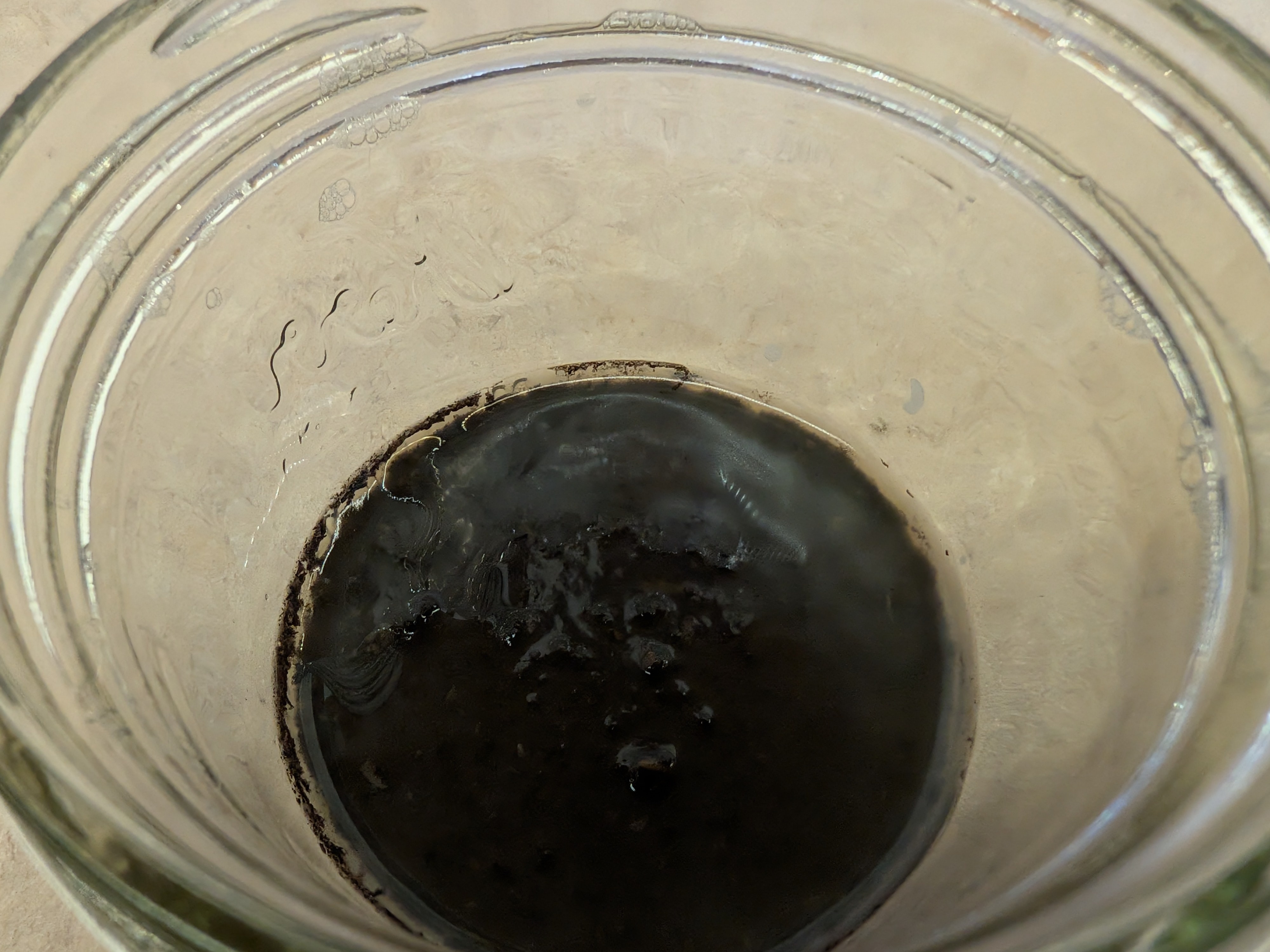
Bacterial Contamination
Often looks like slimy, wet "streaks" or dull gray spots on agar. It doesn't "fuzz" like mycelium or mold.
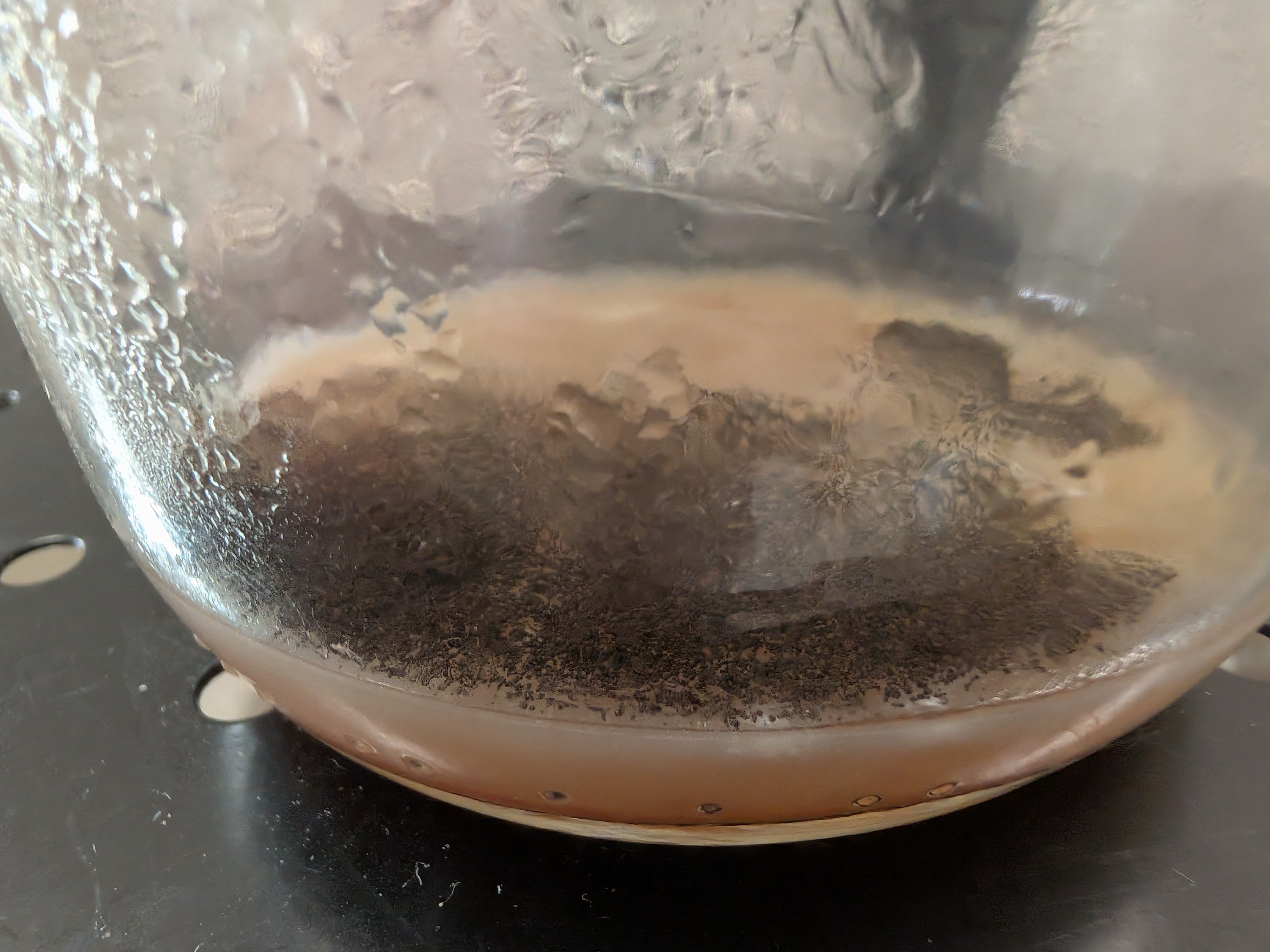
Black Mold (Aspergillus / Stachybotrys)
Appears as soot-like black spots or thick dark mats. Many black molds produce mycotoxins and should be handled with extreme caution—never open these jars outside of the soapy water dunk.
Case Study: Trichoderma in a Bulk Tub
Contamination doesn't just happen on agar or in jars; it can also strike during the Spawn to Bulk (S2B) phase. In this example, a vigorous Shiitake 75 run was overtaken by Trichoderma shortly after spawning.
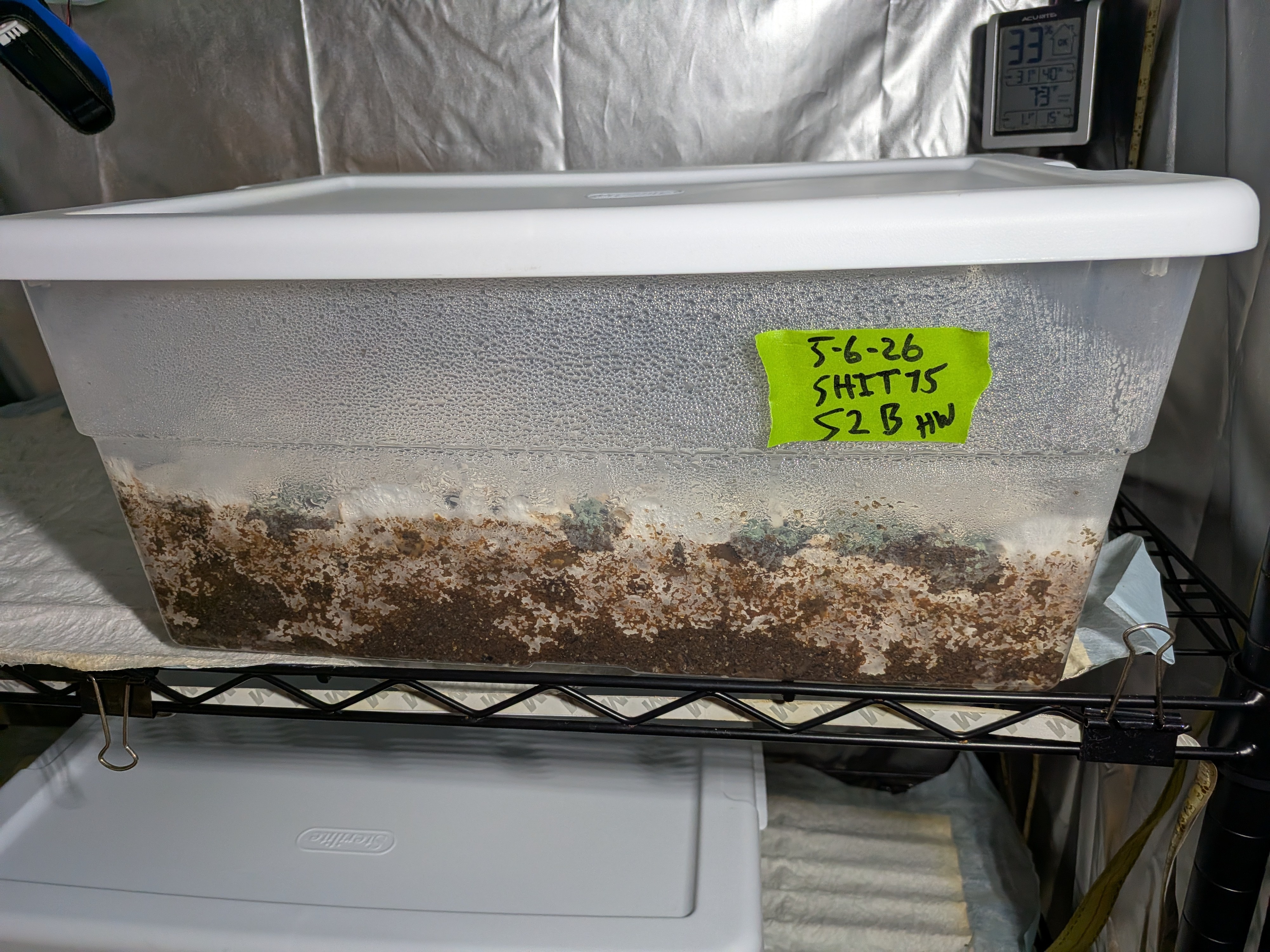
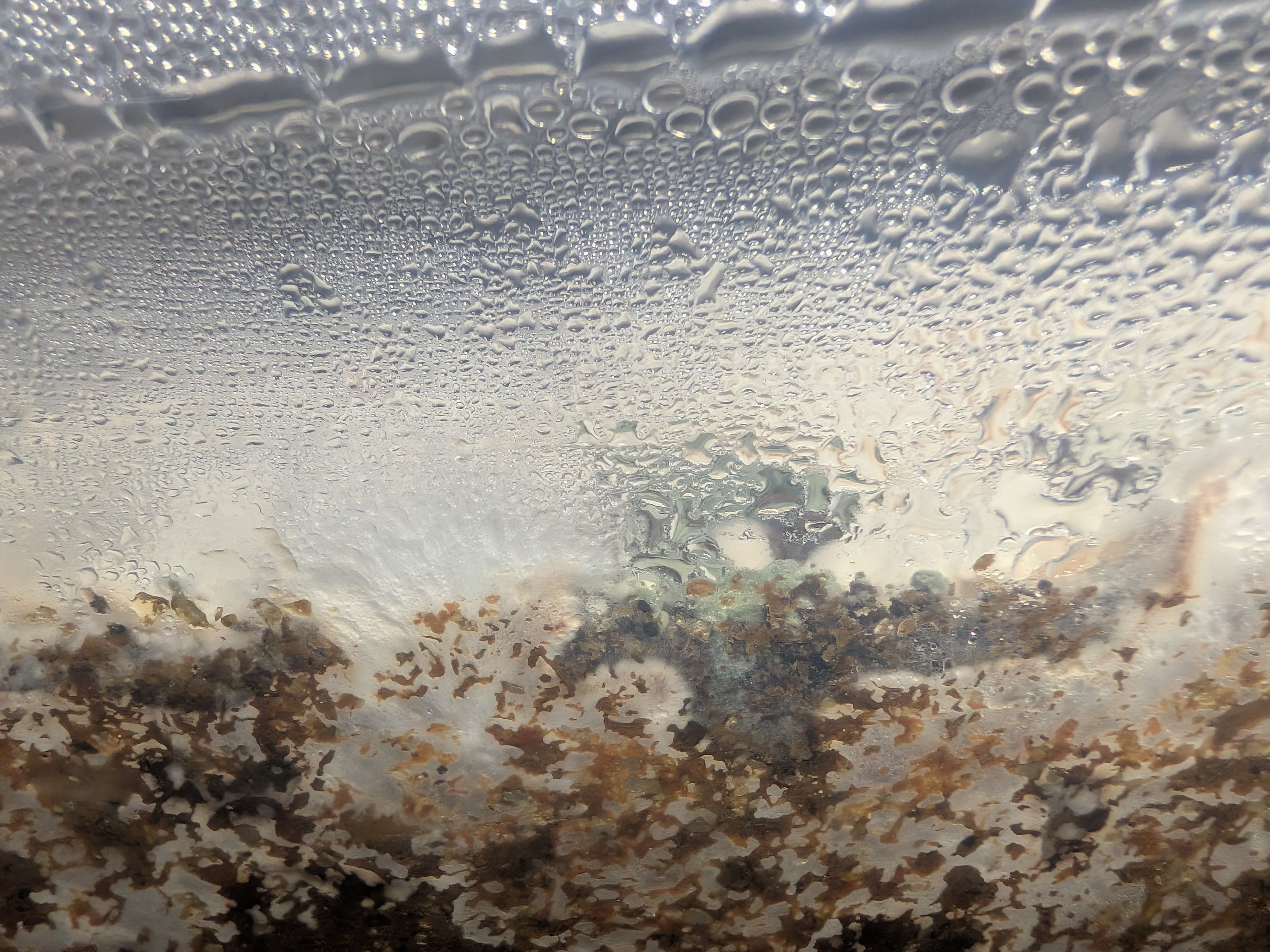
The Lesson: My suspicion for this failure is that the substrate was too wet. High moisture levels in bulk substrate provide an ideal breeding ground for molds like Trichoderma. For future runs, the goal is to reach perfect "field capacity"—squeezing out more water so that only a few drops release when the substrate is squeezed firmly in your hand.