Trial: King Oyster
Cloning Pleurotus eryngii from store-bought grocery specimens.
Progress Log
Start Date: 5-16-2026
Method: Core tissue sample moved to No-Pour Agar (Custom Corn Sugar & Yeast mix).
Quantity: 3 distinct plates.
5-21-2026: As expected, this is the **fastest grower** of the group. The growth is extremely aggressive, with mycelium jumping off the tissue and quickly conquering the agar surface. No signs of contamination.
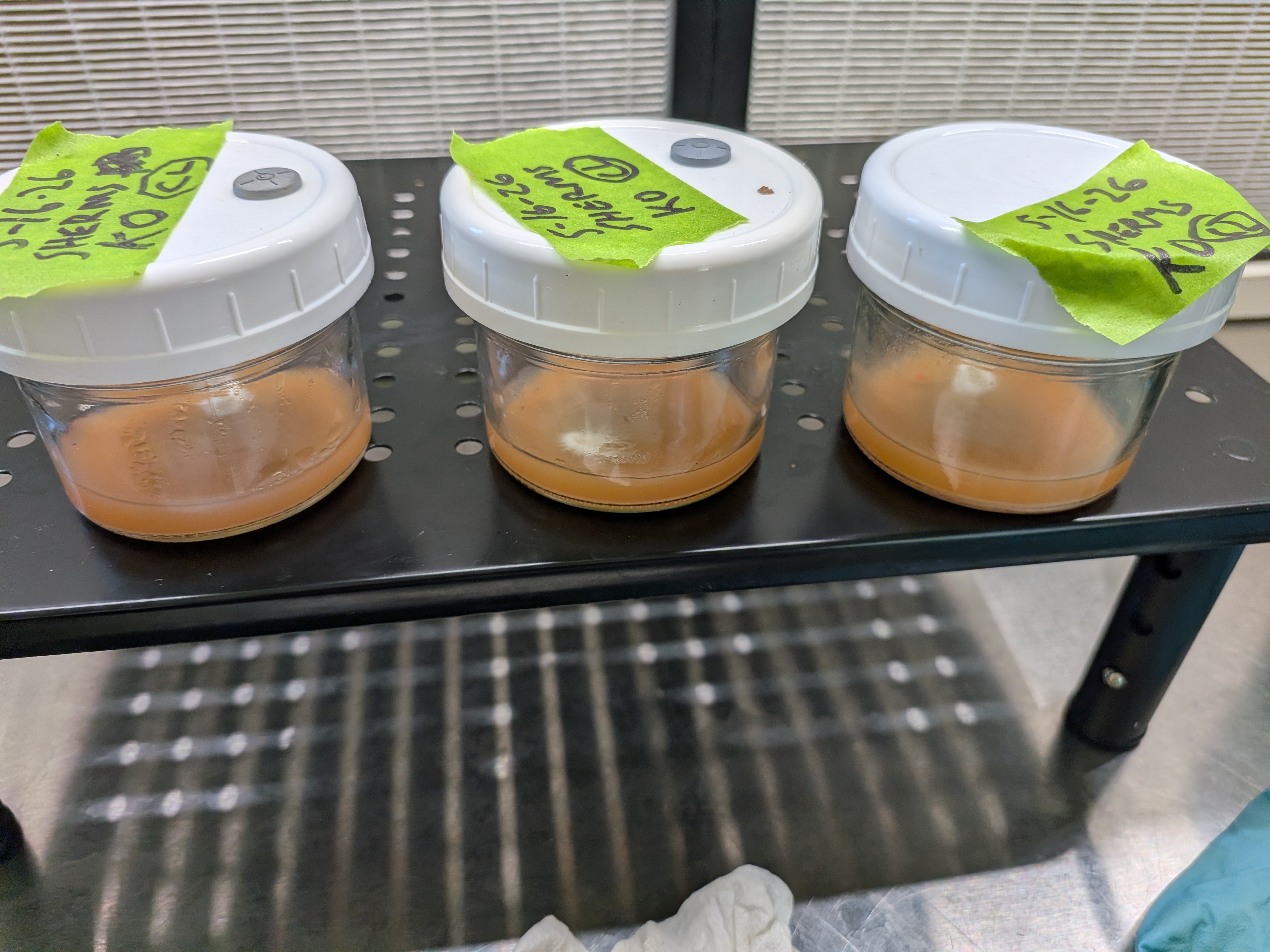
Group overview of the 3 King Oyster plates (Photo: 5-22-2026).
5-24-2026 (Update): Spoted some orange contamination on Plate 2. This is exactly why I took 3 samples of each species—redundancy is key to successful cloning. While Plate 2 is likely a loss, 2 out of 3 plates remain clean and very aggressive.
Orange Bread Mold (Neurospora): An extremely fast-growing contaminant that produces bright orange or salmon-colored spores. I am keeping this jar sealed to prevent the spores from spreading. When it’s time to clean it, I will use the Soapy Water Spore Suppression technique to safely open and wash the jar underwater. 2 out of 3 plates remain strong!
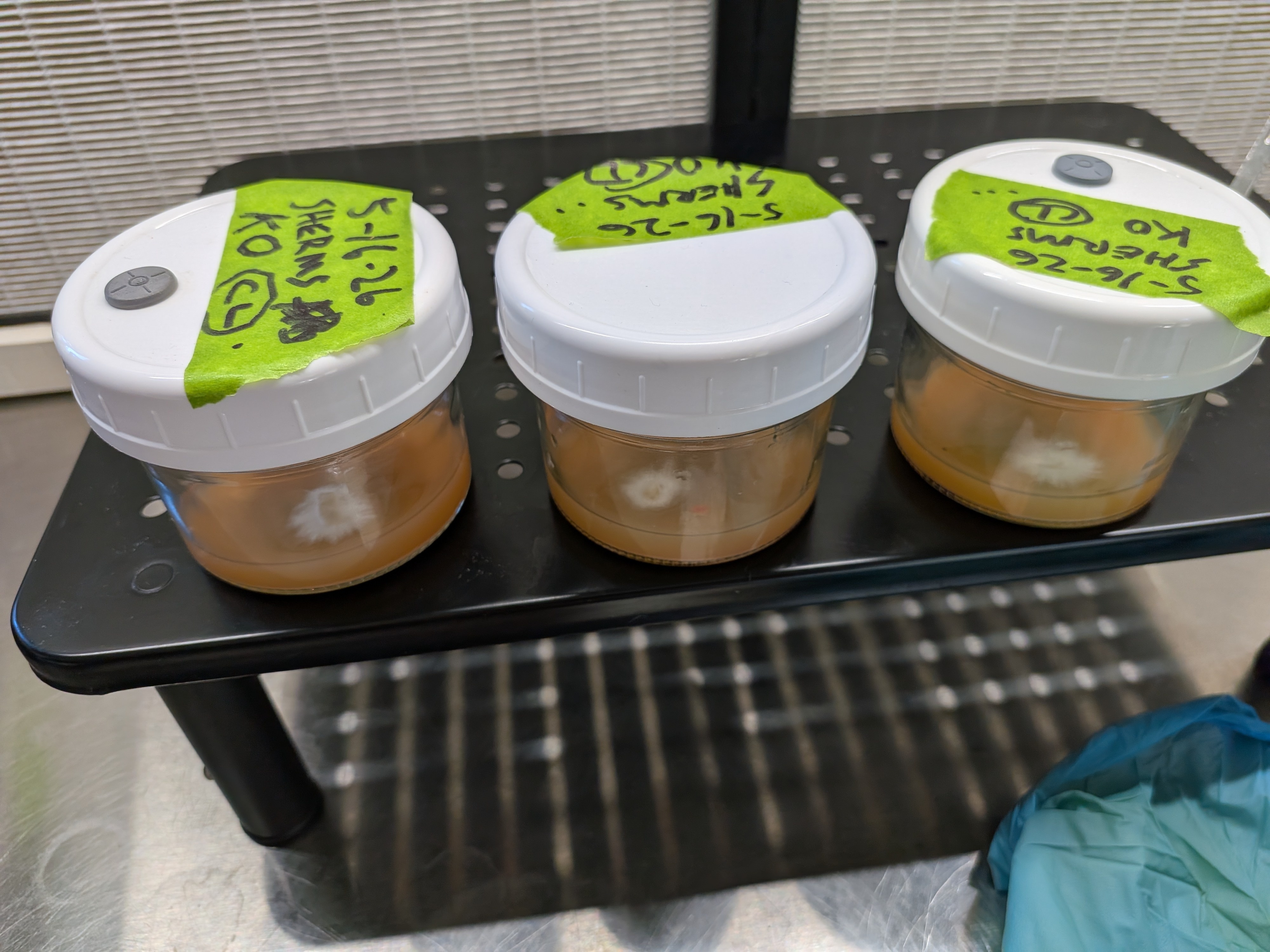
Group overview showing the orange contam on Plate 2 (Day 8).
6-1-2026 (Update): Incredible resilience—Plates 1 and 3 are nearly 100% colonized with thick, aggressive mycelium. Even more interesting, the orange contamination on Plate 2 has been completely grown over by the mycelium and is no longer visible at all. However, it's important to remember that **the contamination is still there** beneath the surface. For this reason, we will not be using Plate 2 for any future transfers. We'll be using one of the truly clean samples (Plate 1 or 3) as our captured strain to ensure we're starting with a pure culture. (Note: If I were desperate, I could attempt a "rescue transfer" by moving a tiny piece of mycelium from a clean-looking section to new agar and watching it closely, but since we have clean plates, there's no need to take that risk.)
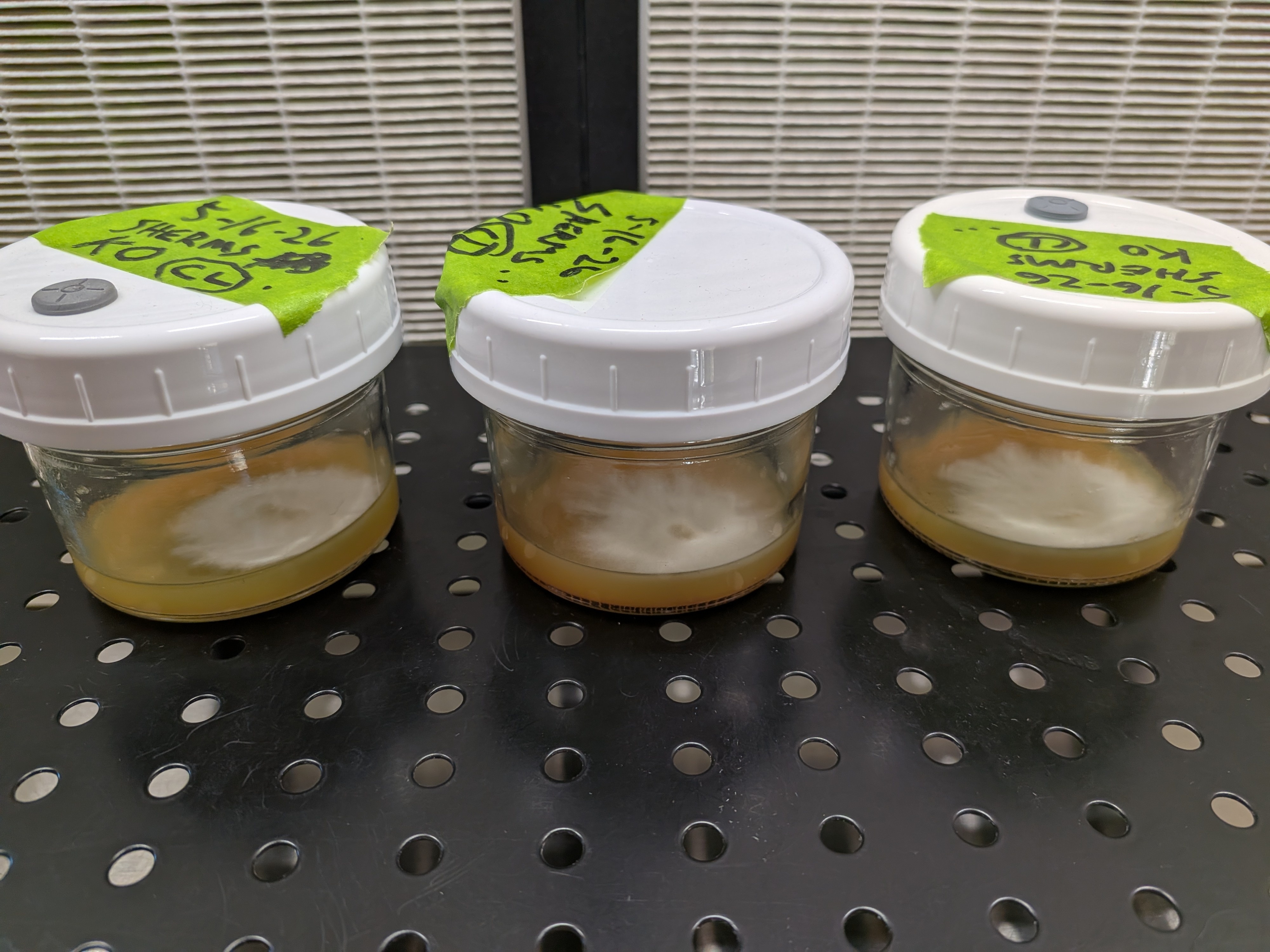
Group overview showing the "overtaken" contam on Plate 2 (Day 16).
6-5-2026 (Update): Final check of the original clone plates. I chose Plate 3 (the strongest and cleanest) and transferred it to 2 new agar plates for further expansion and cleanup.
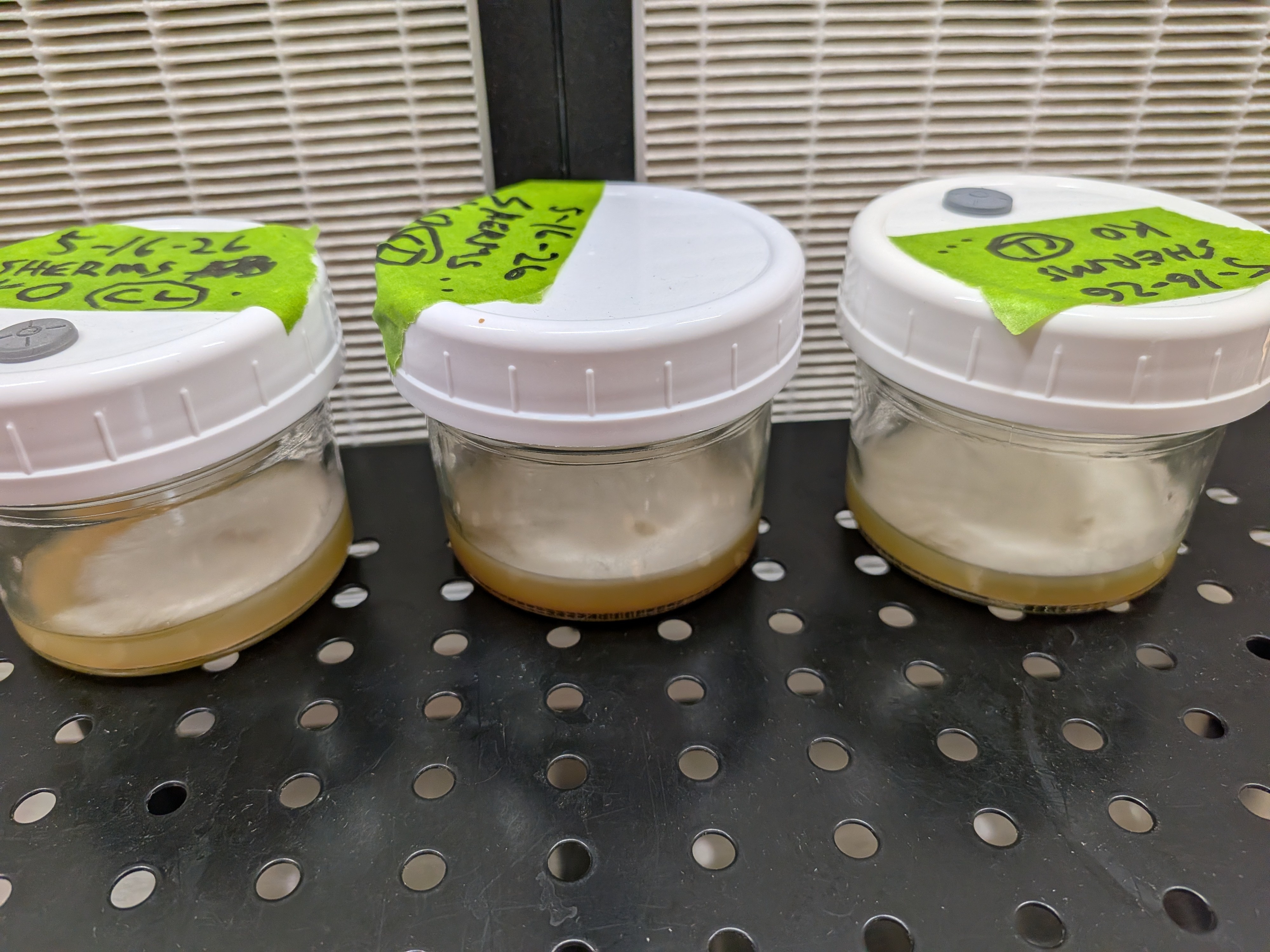
Final overview of clone plates before transfer (6-05-2026).
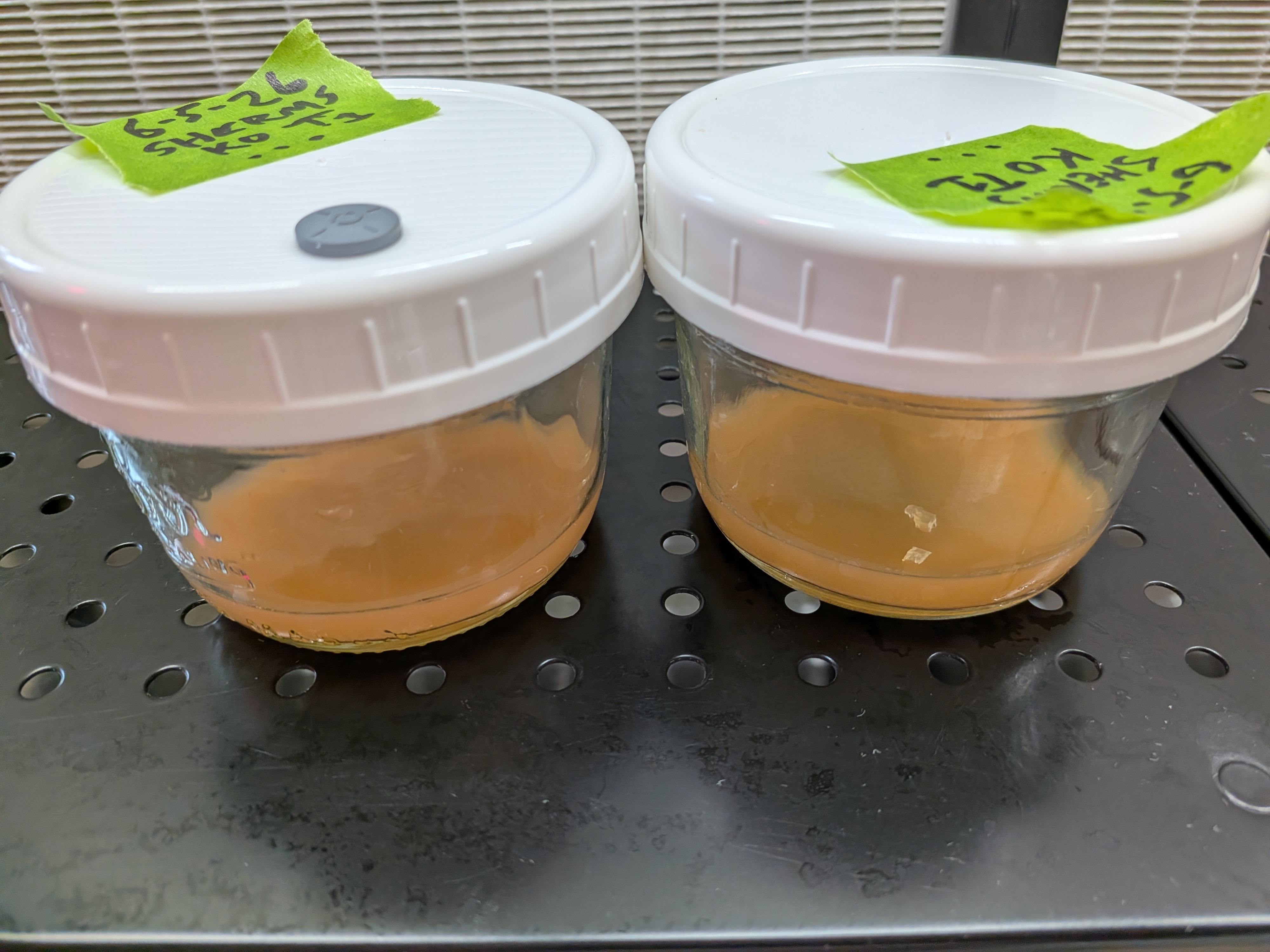
New transfers from Plate 3 to two fresh agar plates (6-05-2026).
6-10-2026 (Update): The first generation of transfer plates is looking great. Both plates are showing healthy, clean growth with no signs of contamination. The King Oyster's aggressive nature is already apparent on the new agar.
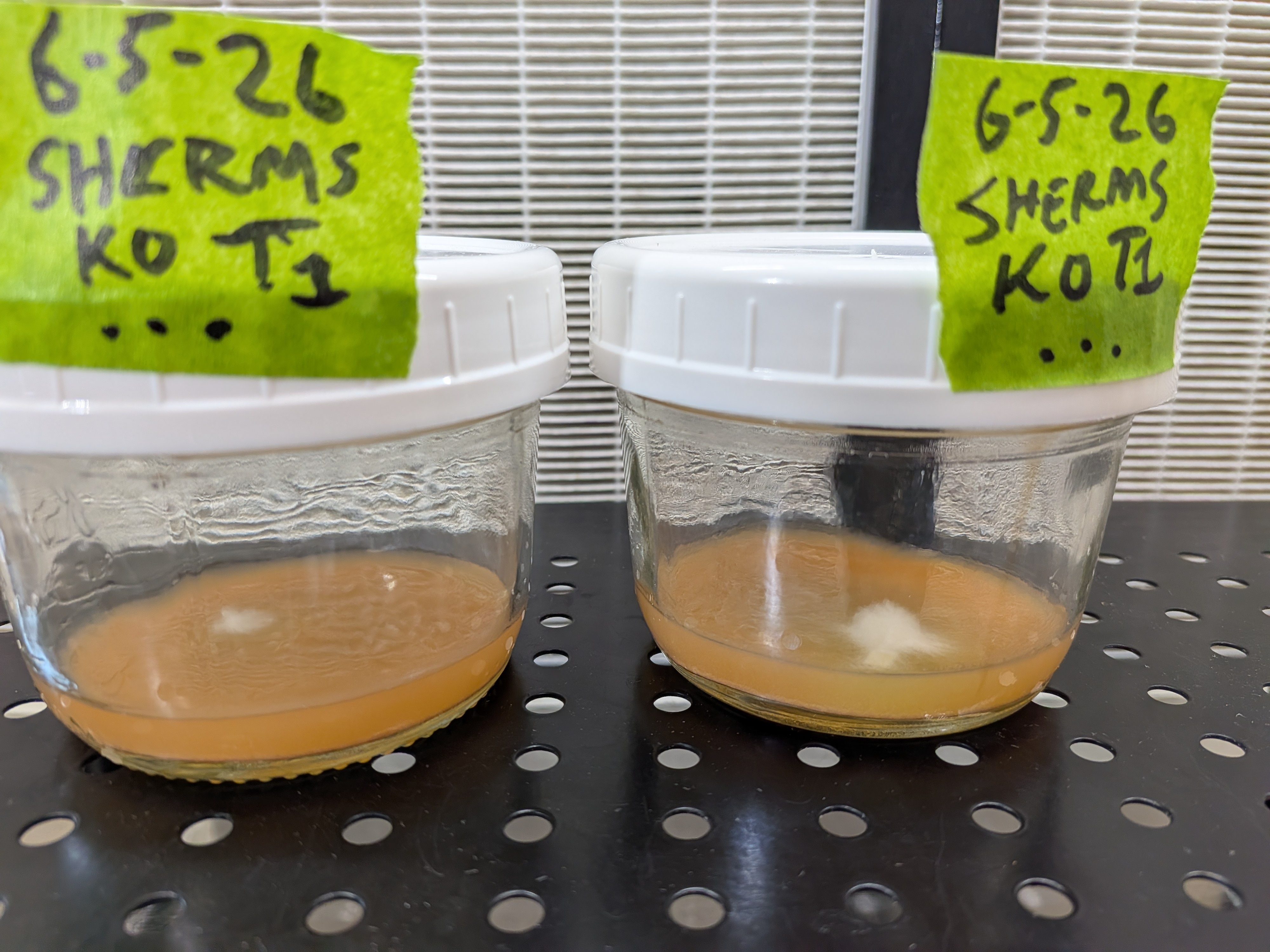
Healthy, clean growth on both transfer plates (6-10-2026).
6-16-2026 (Update): The King Oyster transfers are moving very fast. Growth is clean, thick, and healthy on both plates. No signs of any issues.
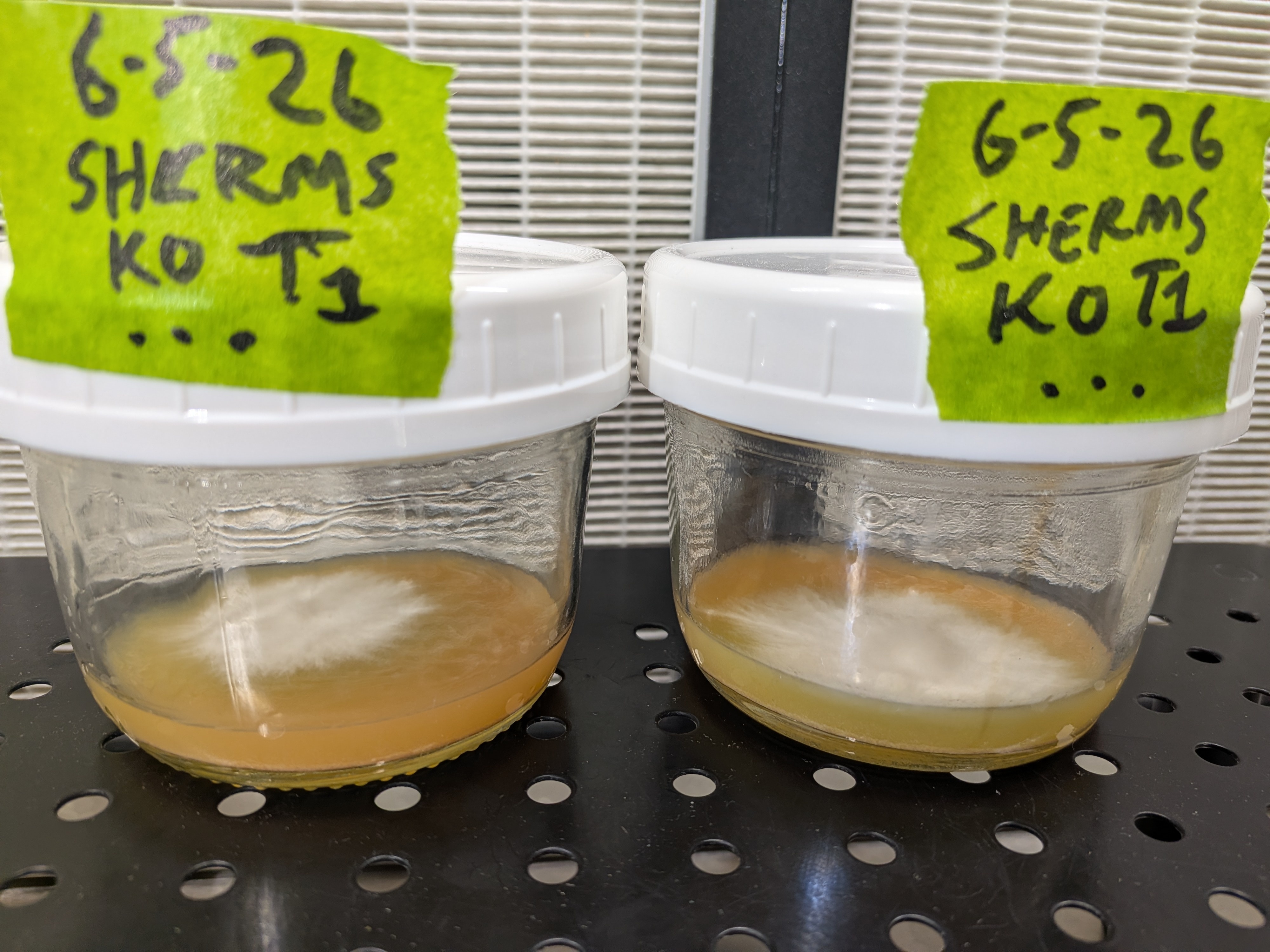
Aggressive, clean growth on the King Oyster transfer plates (6-16-2026).